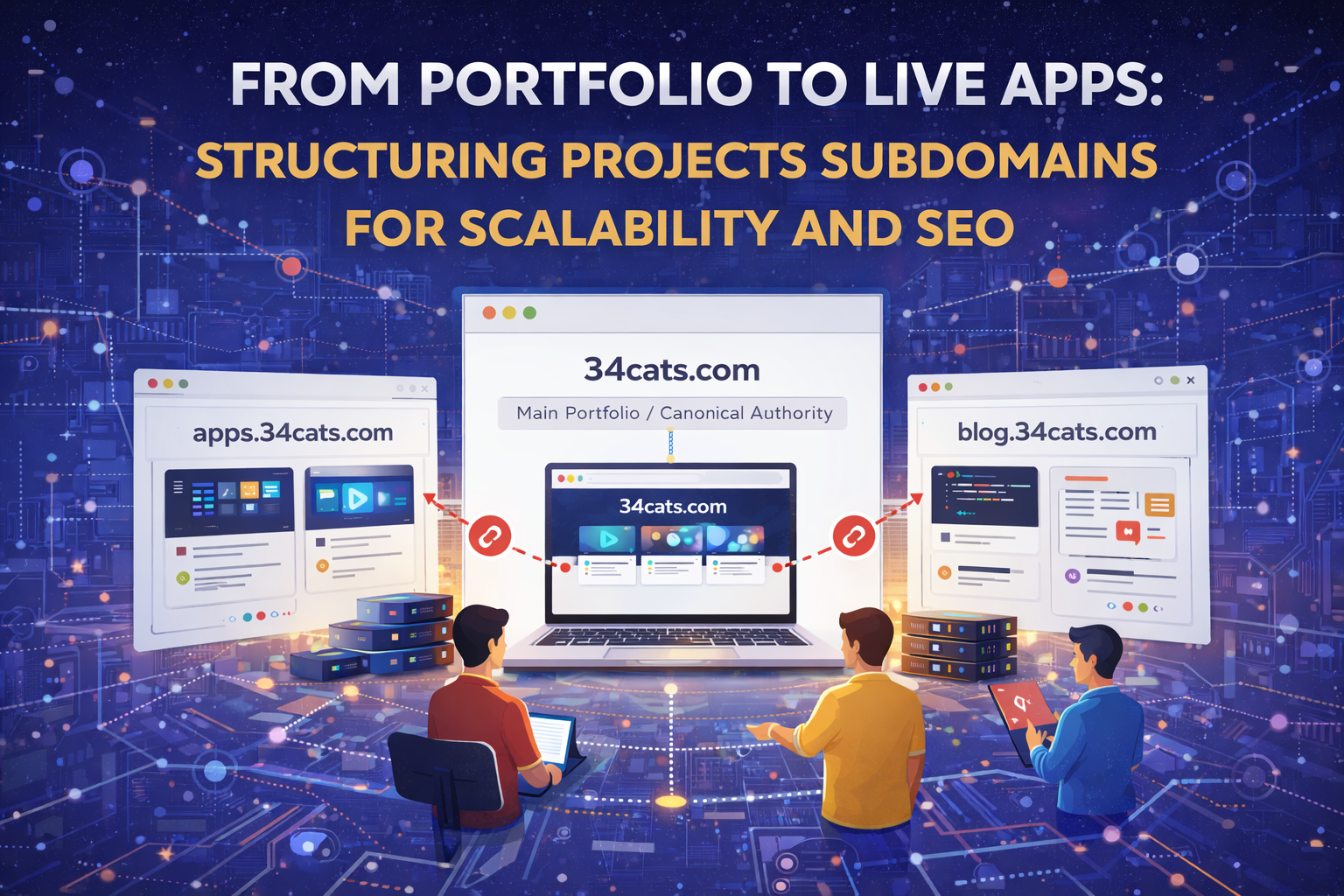
A portfolio should not be a static page of screenshots.
As projects grow in complexity, the structure behind your site becomes just as important as the code itself. I want to share how you can move from a simple portfolio site to live apps, using subdomains to support scalability, maintain clarity, and strengthen SEO.
This is not theory. It is a structure designed for shipping, which I intend to use to build my portfolio and my practice "brand".
Why Portfolios Break Down as Projects Scale
Most developer portfolios start small. A single page lists projects, links to GitHub, and maybe includes a demo video. That works until projects become interactive, stateful, or production-grade.
At that point, the portfolio becomes cluttered. Live demos feel bolted on. Explanations get shallow. Search engines struggle to understand what matters most.
Structure is what solves this problem.
The Core Idea: Separate Concerns Without Fragmenting Identity
The key insight is simple:
separate concerns, not ownership.
Instead of hosting everything on one surface, you assign each concern its own space while keeping them under a single domain umbrella. This preserves brand authority while giving each layer room to grow.
Subdomains are ideal for this role when used intentionally.
Portfolio as the Canonical Entry Point
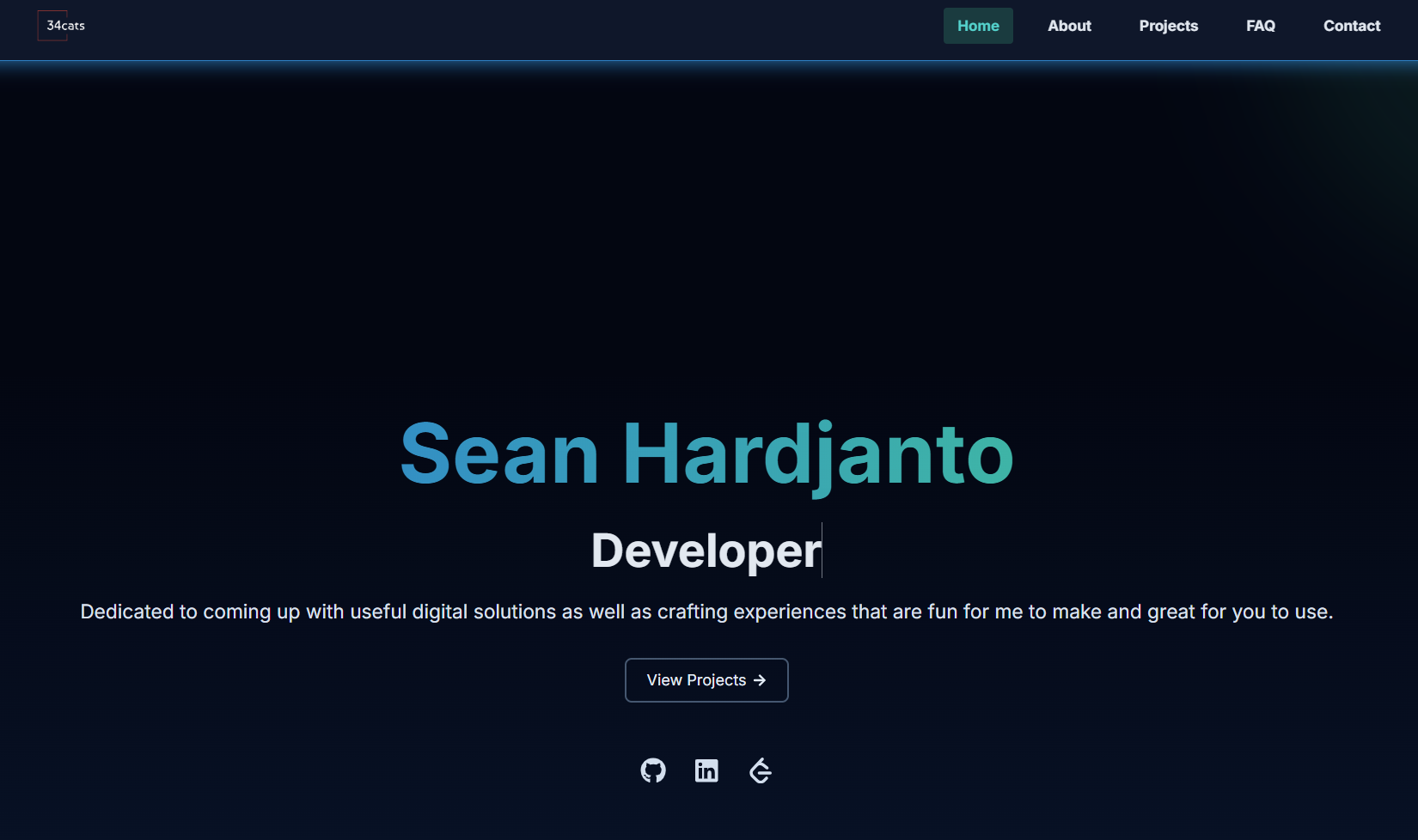 The main domain acts as the canonical identity.
It answers high-level questions: who you are, what you build, and why it matters. It should be concise, stable, and focused on credibility rather than detail.
From an SEO standpoint, this page anchors authority. Everything else exists to support and reinforce it, not compete with it.
Live Apps Deserve Their Own Surface
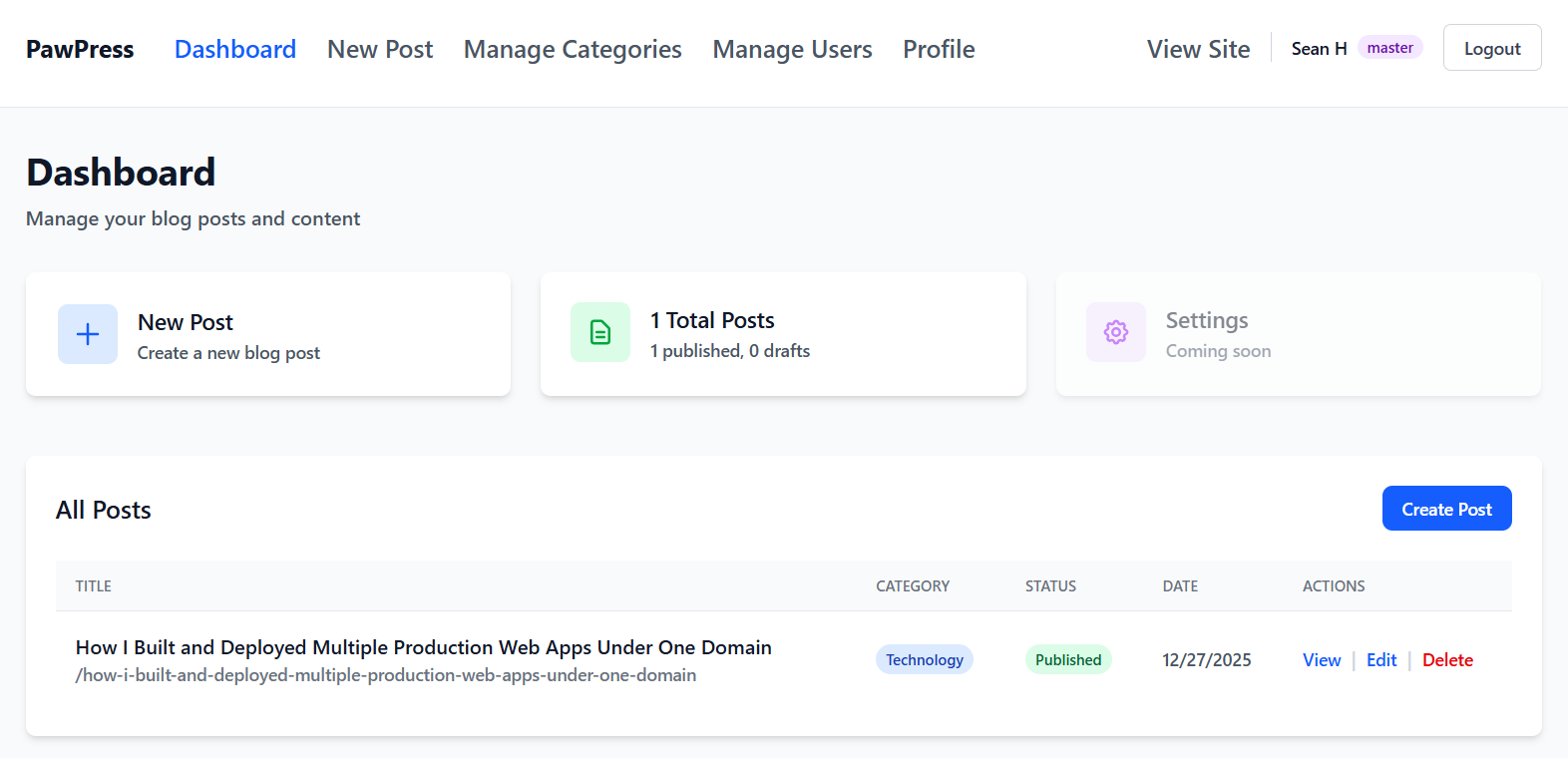 Production apps behave differently from portfolio pages.
They have authentication, databases, edge cases, and performance constraints. Housing them on a dedicated subdomain gives you freedom to deploy, scale, and iterate without breaking the narrative flow of the portfolio.
This also signals seriousness. Live systems speak louder than screenshots.
Why a Dedicated Blog Completes the System
A portfolio shows what.
Live apps prove that it works.
A blog explains how and why.
This is where long-form content belongs. Architectural decisions, deployment tradeoffs, and lessons learned all fit naturally here. Importantly, each article can reference real apps and link back to the portfolio.
This turns content into evidence.
How Subdomains Improve Scalability
Subdomains scale better than sections when projects diversify.
Each app can:
- Use different frameworks or runtimes
- Have independent deployment pipelines
- Evolve without affecting unrelated pages
This avoids tight coupling. You are not redesigning your portfolio every time an app changes. Scalability here is organizational, not just technical.
SEO Benefits of a Subdomain-Based Structure
Search engines reward clarity.
With a clean subdomain strategy:
- The portfolio ranks for brand and identity queries
- Apps rank for long-tail, product-specific terms
- Blog articles rank for informational and experiential queries
Internal links connect these layers, helping authority flow naturally. This is far more effective than forcing everything into a single flat structure.
Internal Linking: The Hidden Multiplier
Internal linking is what turns structure into leverage.
Blog posts should link to:
- Relevant live apps as concrete examples
- The main portfolio as the canonical hub
Apps should link back to:
- Deep-dive blog posts for context
- The portfolio for ownership and credibility
This creates a loop that reinforces relevance without appearing manipulative.
Visual Structure Matters Too
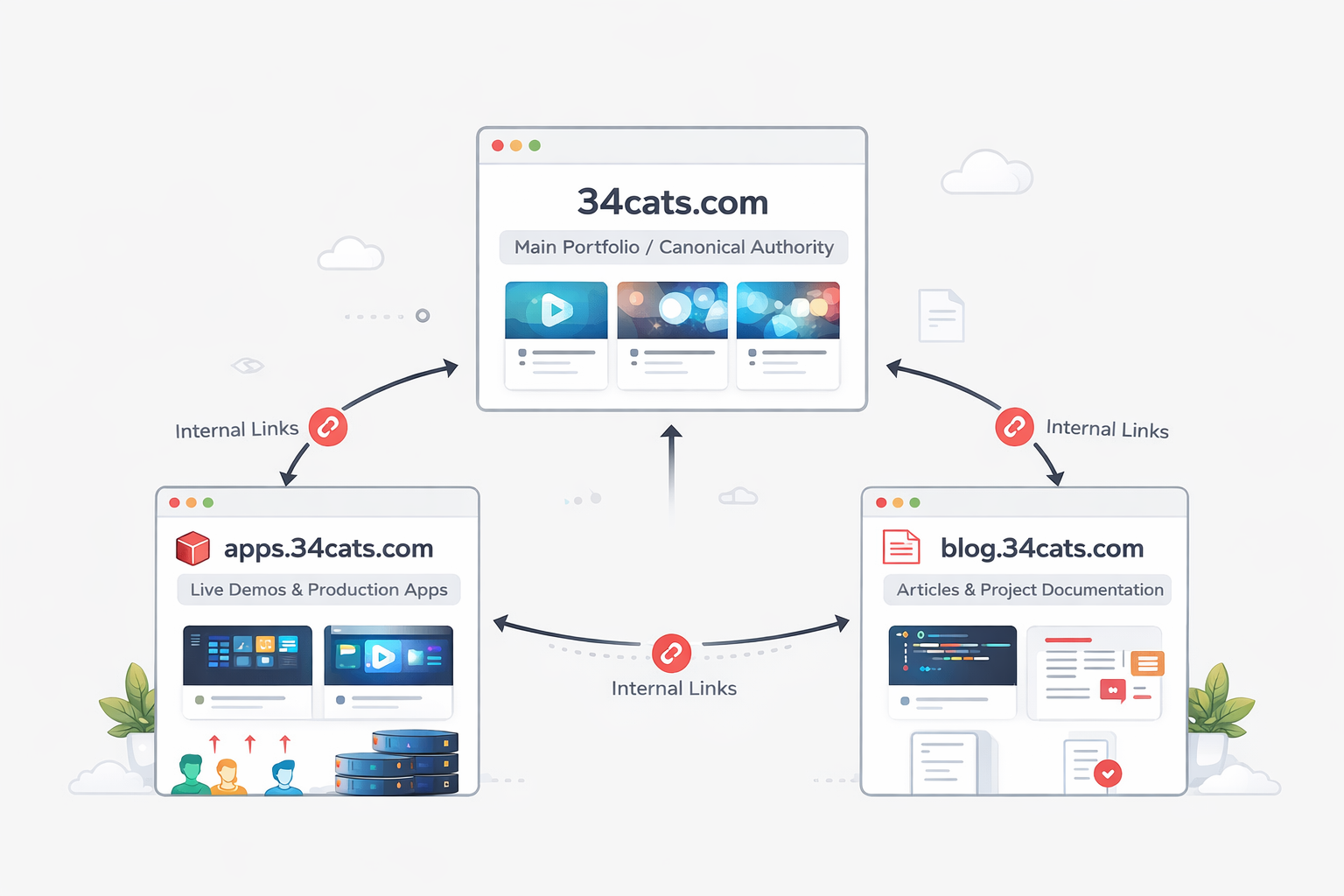 Readers understand systems visually faster than text alone.
Diagrams help both users and search engines contextualize relationships. They reduce bounce rates and increase time on page, which indirectly supports SEO performance.
Common Mistakes to Avoid
There are a few pitfalls that undermine this approach.
One is over-fragmentation, where every small project gets its own domain. Another is treating subdomains as silos with no internal links. Both dilute authority.
The goal is structured cohesion, not separation for its own sake.
When This Structure Makes Sense
This setup is ideal if you:
- Build multiple serious projects
- Maintain live demos or tools
- Write technical or reflective content
- Care about long-term discoverability
If you only have one small project, this may be premature. But once you cross that threshold, structure becomes an asset.
From Side Projects to a Scalable System
What starts as a portfolio can become a system.
By structuring projects across subdomains, you gain flexibility without losing identity. You make it easier for users to explore, for search engines to understand, and for yourself to keep shipping without friction.
That is the real value of thoughtful site architecture.
Final Thoughts on Structuring for Scalability and SEO
Subdomains are not about complexity. They are about intentional growth.
When each surface has a clear role and everything ties back to a single canonical domain, your work compounds. Projects stop feeling isolated. Content stops being filler. The portfolio becomes a living system.
That is how portfolios grow up.